Currency

Does My Saddle Fit? 9 Signs Your Horse Is Uncomfortable
16
Jan
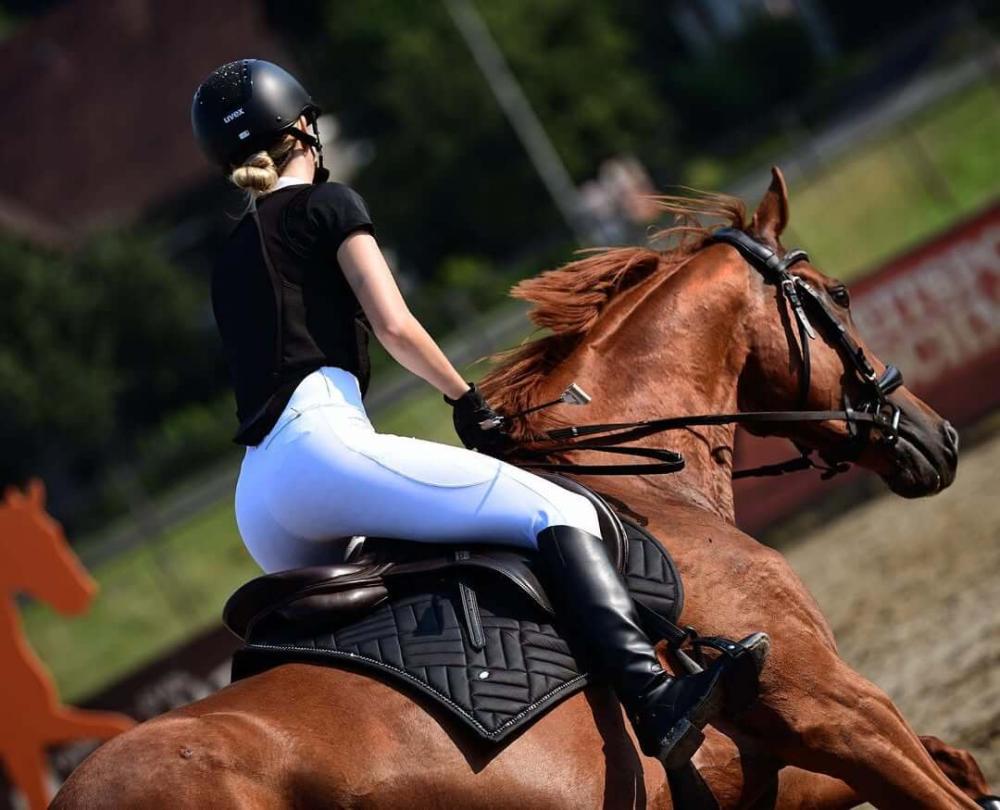
Image Credit: @vcresch
Does My Saddle Fit? 9 Signs Your Horse Is Uncomfortable
Table of Contents
- Why saddle fit matters more than we think
- 9 signs your horse is uncomfortable
- Quick kindness checks you can do before every ride
- What to do next: try before you buy
- FAQs
There’s a moment many of us know: you’ve finally got time for a quiet ride, you tack up, swing into the saddle, and your horse… sighs. Not the relaxed kind. The “something’s not right” kind. Maybe they’ve started swishing their tail, refusing to stand, or hollowing the second you pick up the reins.
When we love our horses, it’s easy to assume they’ll tell us loudly if they’re unhappy. But discomfort is often subtle at first. And one of the most common causes is a saddle that doesn’t fit as well as we hope.
If you’ve ever caught yourself Googling saddle fitters near me because you want someone to take a proper look, you’re not alone. And if you’ve heard (or even said) “This saddle fits everything”, this guide is a gentle reminder: your horse’s back deserves a bit more kindness than a one-size-fits-all promise.
In this post, we’ll walk through 9 clear signs your horse may be uncomfortable, what they could be trying to tell you, and the small, thoughtful checks you can do today. If you want extra peace of mind, you can also book a trial and ride in real life before you commit. (More on that below.)
1.) Why saddle fit matters more than we think

A saddle sits on moving muscles, not a static shape. Horses change with seasons, workload, age, and even stress. That means a fit that was “fine last summer” might be pinching now, or sliding and loading pressure in the wrong places.
Good saddlery is not about being fancy, it’s about being fair. When the saddle is comfortable, you feel the swing in their back, the softness in the contact, the willingness to step forward. When it’s not, they protect themselves first. They might shorten their stride, brace their neck, or stop trusting the work.
Image Credit: @vcresch
2.) 9 signs your horse is uncomfortable (and what they might mean)
None of these signs automatically means “bad horse”. Most are communication. Your job is to listen, then investigate with calm, practical steps.
You might hear a friend say, “This saddle fits everything”. It’s usually meant kindly, but it can stop us from asking the questions our horses need us to ask.
Sign 1: They’re harder to tack up than they used to be
What you might notice: pinned ears, stepping away, snaking their head, rushing the girth.
What it can mean: soreness around the wither, shoulder, or girth area; anxiety linked to past discomfort.
Small act of kindness: slow down. Girth in stages. Pause. Reward stillness. If the behaviour is new, treat it as information, not attitude.
Sign 2: White hairs, rubs, or uneven sweat marks
What you might notice: dry patches under the panel, sweat lines that are heavier on one side, rubbing at the wither or behind the elbow.
What it can mean: pressure points, friction, or asymmetry that’s increasing strain.
Small act of kindness: take photos after every ride for a week. Patterns are easier to spot over time.
Sign 3: Tail swishing that doesn’t match the situation
What you might notice: persistent swishing on straight lines, not just when flies are bad.
What it can mean: discomfort through the back, girth, or loins.
Small act of kindness: check your girth position, check for trapped hairs, and make sure the saddle isn’t creeping forward onto the shoulder.
Sign 4: They feel hollow, rush, or feel “tight” in the first 10 minutes
What you might notice: tense back, rushing transitions, reluctance to stretch.
What it can mean: the saddle may be restricting movement until muscles warm up, or it may be immediately uncomfortable.
Small act of kindness: hop off after five minutes and re-check balance. A quick re-check can save a whole ride.
Sign 5: They won’t bend evenly, or one rein always feels heavier
What you might notice: drifting, falling in/out, stiffness on one rein.
What it can mean: pressure on one side, saddle twist, flocking imbalance, or the saddle sliding.
Small act of kindness: watch from behind on a straight line. If the saddle consistently sits to one side, don’t “ride it straight” and hope. Investigate.
Sign 6: Reluctance to go forward (especially after fences or a canter transition)
What you might notice: sticky brakes, bucking, hopping, or a sudden loss of enthusiasm.
What it can mean: back pain, saddle pressure, or discomfort when the back lifts.
Small act of kindness: reduce intensity for a week, prioritise long, low stretching, and check fit before blaming fitness or naughtiness.
Sign 7: They stumble more than usual
What you might notice: tripping behind, toe dragging, feeling “behind the leg”.
What it can mean: restricted shoulder movement, discomfort that makes them protect their stride, or fatigue from compensation.
Small act of kindness: rule out hoof and limb issues with your usual professionals, but also check that the saddle isn’t sitting on the shoulder blade.
Sign 8: Your position feels wrong, no matter how hard you try
What you might notice: tipped forward, chair seat, fighting to stay centred.
What it can mean: saddle balance is off. If the saddle puts you in a bad spot, it’s rarely just “you”.
Small act of kindness: ask a friend to film 30 seconds at walk and trot. Sometimes the video is the kindest truth.
Sign 9: Your horse changes after you ride (not during)
What you might notice: sore when brushed, girthy the next day, flinching when you run your hand along the back.
What it can mean: pressure that builds during work.
Small act of kindness: do a calm “aftercare check” every ride: back rub, wither rub, stretch a foreleg, then note any reactions.
3.) Quick kindness checks you can do before every ride
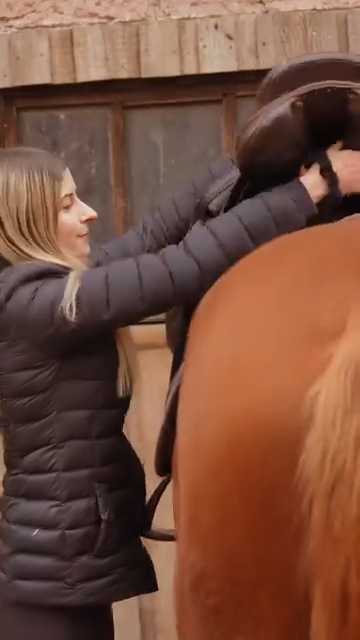
These take two minutes, and they’re some of the best habits a responsible rider can build.
- Look at the wither and shoulder clearance before you girth up and after you sit on.
- Check that the saddle isn’t bridging (touching front and back but not the middle).
- Check balance: you shouldn’t feel forced into a chair seat or perched forward.
- Run your hand under the panels (carefully) and notice any sharp pressure points.
- Check for slipping after a short walk and trot.
Image Credit: @vcresch
If you’re searching “horse shop near me” for hands-on help, or “saddlery near me” because you want reassurance from someone who understands horses first, the simplest next step is often to try a saddle properly in your normal routine.
4.) What to do next: try before you buy
If any of these signs sound familiar, you don’t need to guess. You can try a saddle at home, on your horse, in your own schooling, hacking, and everyday life.
- Start with our step-by-step guide: How to Book a FREE Saddle Trial for 14 Days
- Then go straight to the trial page to get the process moving: Start the 14-Day Trial
- And if you want to browse styles first, here’s our saddle range: Shop saddles
A quick note about the phrase “This saddle fits everything”: it’s comforting, but it can keep us from noticing what our horse is quietly telling us. The kindest owners are the ones who stay curious, keep checking, and adjust as their horse changes
5.) FAQs
“My horse seems fine most days. Should I still worry?”
If your horse has occasional off days, it can be normal. But repeated patterns matter. If you’re repeatedly searching “horse shop near me” after a ride because something felt off, trust that instinct and do a fit check.
“What if I’m not sure whether it’s the saddle or training?”
Treat it like a puzzle, not a blame game. Rule out obvious comfort issues first, then build training back up.
“Do I need a professional fitter every time?”
Not always. But having support makes it easier, especially if you’re unsure. Good fit support is about guidance, not pressure.
If you’re thinking saddle fitters near me and you want a practical, low-stress way to test fit, the 14-day trial is designed exactly for that.
Ready to buy, or want to try first?
Book your FREE 14-day saddle trial.
Recent Posts
-
Young or Sensitive Horse? How to Use a Saddle Trial to Build Confidence
 February 6, 2026
 -
Saddles for Sale in the UK: Why Trying Before You Buy Saves You Money
 January 30, 2026
 -
Poor Saddle Fit: From Girth Rubs to Hollow Backs – What to Watch For
 January 23, 2026
 -
Does My Saddle Fit? 9 Signs Your Horse Is Uncomfortable
 January 16, 2026
 -
The Year in Review: Cavaletti Highlights and Rider Achievements 2025
 December 19, 2025