Currency

Young or Sensitive Horse? How to Use a Saddle Trial to Build Confidence
6
Feb

Image Credit: @mirandashorseyadventures
Young or Sensitive Horse? How to Use a Saddle Trial to Build Confidence
Table of Contents
- Why confidence and saddle fit are linked
- Signs your horse is saying, “I’m not sure”
- How to build a horse’s confidence under saddle trial: the mindset
- A kind 14-day plan you can actually stick to
- When to pause, adjust, or swap the saddle
- The fitting piece: setting your horse up to win
- Ready to try?
There’s a moment nearly every rider remembers: you swing a leg over, take up the reins… and feel that tiny hesitation underneath you. Not “naughty”. Not “stubborn”. Just unsure.
Maybe it’s a young horse who’s still figuring out what the world looks like with tack on. Maybe it’s a sensitive soul who feels everything. Either way, the goal isn’t to “get through it” — it’s to help them feel safe enough to try.
That’s where a trial can be a game-changer. When you buy a saddle, you’re not only choosing leather and stitching. You’re choosing how your horse will experience pressure, balance, movement, and comfort every single ride. And for horses who are still learning confidence, the right approach matters just as much as the right fit.
If you haven’t already, start with the main guide here: How to Book a FREE Saddle Trial for 14 Days — it walks you through the process step-by-step.
Why confidence and saddle fit are linked
Confidence under saddle is built from tiny “yes” moments. A soft step forward. A sigh. A back that swings instead of braces. Those moments are hard to come by if the saddle is tipping, pinching, rocking, or restricting the shoulder.
For a young horse, the saddle is one of the first “big” pieces of equipment they have to interpret. If their earliest rides feel awkward or uncomfortable, they can start to predict that ridden work equals stress. That’s why a trial isn’t just a shopping step — it can be a kindness step.
A good trial gives you space to notice how your horse changes over multiple sessions, not just the first trot circle on day one. And when you buy a saddle, having that breathing room can be the difference between “it seemed fine” and “it truly supports my horse”.
Want to browse shapes and styles first? Have a look through the saddle categories so you’ve got a clearer idea of what you’re trialling.
Signs your horse is saying “I’m not sure”
Sensitive horses rarely shout. They whisper. And the kindest thing we can do is listen early.
Look out for:
- Tightening through the back when you mount (even if they stand still)
- A shorter stride that improves the moment you take the saddle off
- Tail swishing that appears only once you pick up a contact
- Hollowing in transitions (especially downward)
- A reluctance to go forward in one direction or on one rein
- “Busy” behaviour that feels like worry rather than cheek
If you’re thinking, “This could be training… or it could be comfort,” you’re already on the right track. A trial lets you test and learn without rushing to commit — especially before you buy a saddle you’ll rely on every day.
How to build a horse’s confidence under saddle trial: the mindset
Let’s say the quiet part out loud: a trial is not a test your horse must pass. It’s information. And the calmer you stay, the calmer your horse becomes.
Here are three mindset shifts that help massively:
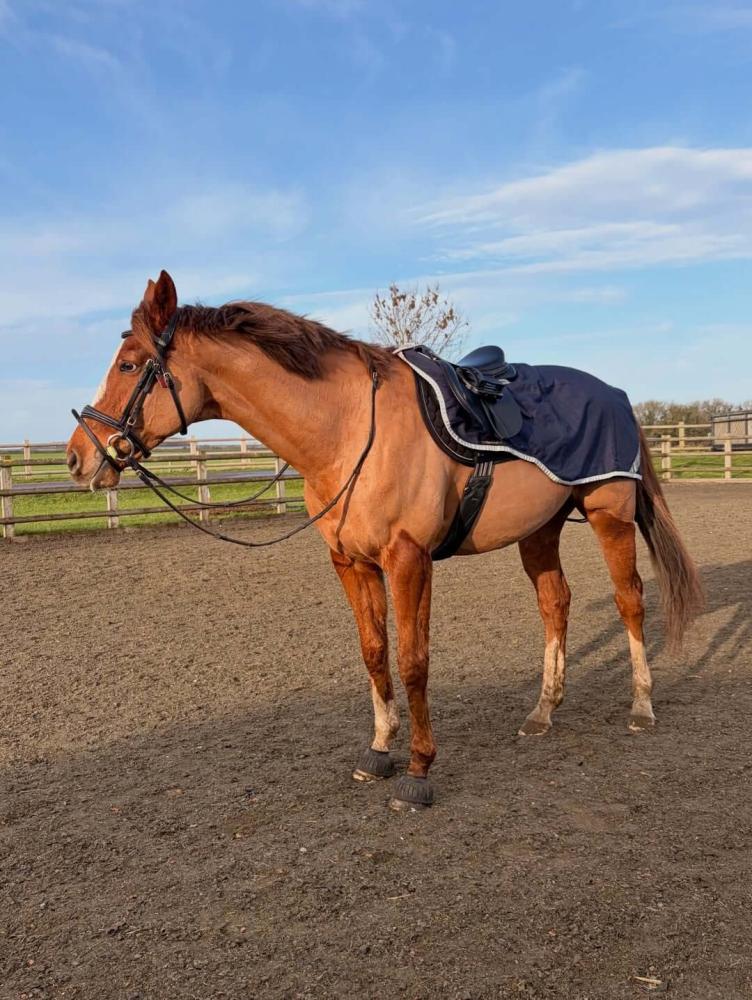
1) Slow is not failing
On day one, your job is not to “work them”. Your job is to help them feel safe. That’s how you keep rides positive and build trust over the full trial period.
2) Comfort is a training aid
When the saddle supports balance, the “schooling problems” often shrink. A horse that can lift through the back finds transitions easier. A horse that can breathe and swing is more willing to go forward.
2) Small acts of kindness add up
Extra time grooming. Walking a lap on a long rein. Ending early after a good try. These are the moments that teach a sensitive horse: “You are heard.”
If you want a simple framework, keep coming back to this question: how to build a horse’s confidence under saddle trial without overwhelming them. The answer is nearly always: consistency, comfort, and calm.
Image Credit: @jerseywonder
A kind 14-day plan you can actually stick to
This is a realistic rhythm for normal life (work, weather, arenas booked out… we get it). Adjust as needed, but keep the pattern: short, positive, repeatable.
Days 1–3: Settle and observe
- Tack up slowly. Let them look, sniff, breathe.
- Keep rides short: mostly walk, a little trot if they feel ready.
- Focus on relaxation, not “frames”.
Kindness tip: If your horse tries, stop and praise. End on a win — even if it’s small.
Days 4–7: Add gentle variety
- Include hacking if it helps them relax.
- Do simple shapes in the school: big circles, serpentines, lots of walk breaks.
- Notice changes: does the back feel softer? Are transitions less sticky?
If you’re trialling with the intention to buy a saddle, these days often reveal the truth. The first ride can be deceiving — the “pattern” is what matters.
Days 8–11: Build confidence, not pressure
- Introduce a little more trot work, light canter if appropriate.
- Keep expectations kind and clear.
- If they feel worried, go back to what they can do calmly.
This is where many riders see the difference between “it sits on the horse” and “it supports the horse”.
Days 12–14: Confirm or adjust
- Aim for two rides that feel consistent.
- If you can, have someone video a short session from the side and behind.
- Check how your horse feels the day after riding.
And again, the guiding question is how to build a horse’s confidence under saddle trial while you gather genuine feedback — not forced performance.
To get the trial started (or to understand the process), use the main guide: How to Book a FREE Saddle Trial for 14 Days.
When to pause, adjust, or swap the saddle
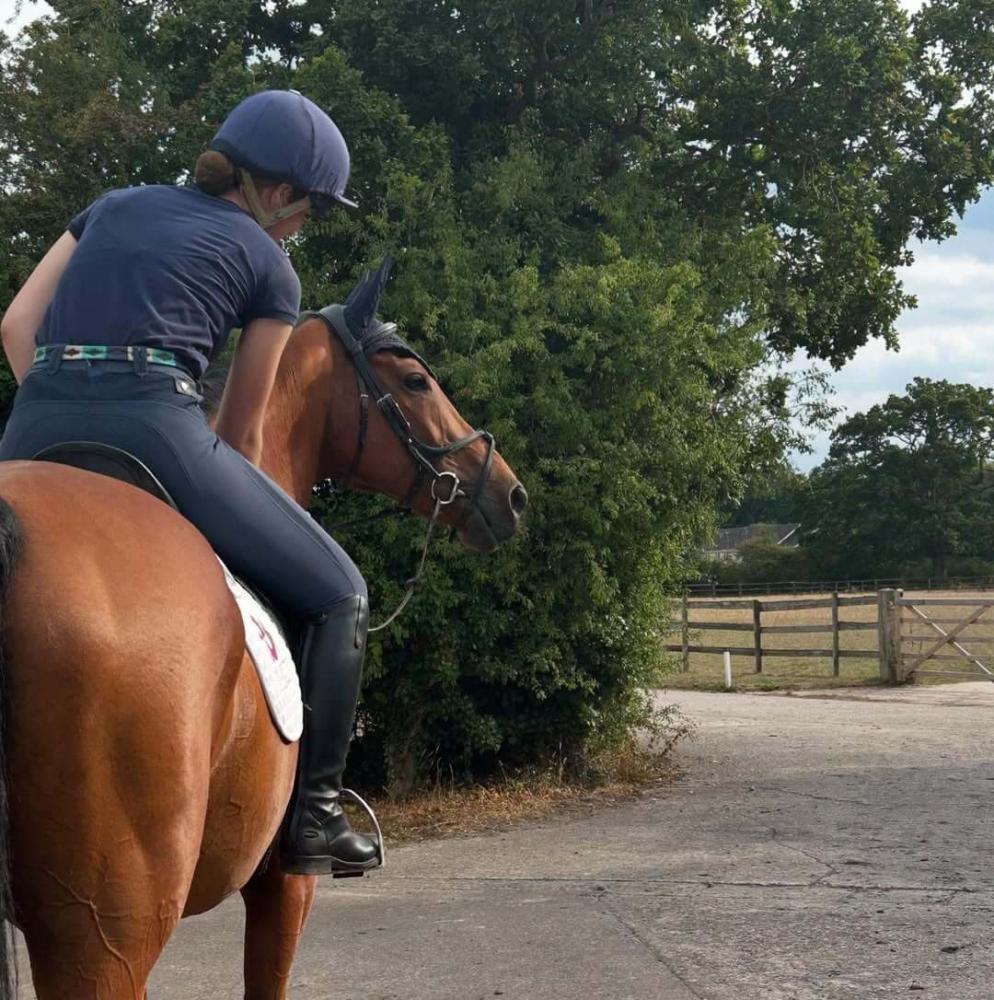
A sensitive horse will often tell you quickly when something is off — but not always in obvious ways.
Pause and reassess if you notice:
- Behaviour worsening over multiple rides (not just one “bad day”)
- Dry spots or ruffled hair after untacking
- A consistent dip behind the wither when you mount
- Reluctance that appears only in the school, not out hacking
Sometimes the answer is as simple as adjusting flocking or confirming the balance. Sometimes the saddle style isn’t right for that back shape. That’s the value of a trial: you can make an informed decision before you buy a saddle that becomes a daily question mark.
If you want to explore alternatives, return to the saddle categories and note what changes between models (seat balance, panel shape, flap position). Small differences can feel huge to a horse.
Image Credit: @team_allerton
The fitting piece: setting your horse up to win
If confidence is the goal, the fitting process is the support system.
If you’re ready to take the next step, book a fitting so you’re not guessing from photos or hoping it “beds in”. A proper fitting helps you understand not only what fits today, but what will continue to fit as your horse changes.
This is especially important with a young horse. Their shape can alter quickly as they develop topline, muscle, and posture. What fits in month one may need adjustments later — and that’s normal.
A few practical tips:
- Keep a short ride diary during the trial: duration, work done, how they felt.
- Note any changes in mounting, contact, canter transitions, and relaxation.
- If something feels “slightly off,” don’t ignore it. That’s your horse communicating early.
And yes — it’s absolutely okay to book a fitting even if you feel like you “should know” by now. The best horse people I know ask for help early, because they’d rather be kind than be right.
If you’re still deciding whether to buy a saddle now or trial first, start here: 14-Day Trial page.
Ready to try?
When you’re working with a sensitive horse, progress can look quiet. But quiet progress is still progress.
The goal isn’t a perfect outline by day fourteen. The goal is a horse that steps up to the mounting block without bracing. A horse that starts to swing through the back. A horse that learns ridden work can feel fair.
That’s why a trial can be such a powerful part of the story — not just the shopping.
If you want support choosing the right option before you buy a saddle, you can book a fitting and get guidance tailored to your horse and your riding goals.
And if you haven’t yet, follow the step-by-step guide: How to Book a FREE Saddle Trial for 14 Days.
Ready to buy, or want to try first?
Book your FREE 14-day saddle trial.
Recent Posts
-
Young or Sensitive Horse? How to Use a Saddle Trial to Build Confidence
 February 6, 2026
 -
Saddles for Sale in the UK: Why Trying Before You Buy Saves You Money
 January 30, 2026
 -
Poor Saddle Fit: From Girth Rubs to Hollow Backs – What to Watch For
 January 23, 2026
 -
Does My Saddle Fit? 9 Signs Your Horse Is Uncomfortable
 January 16, 2026
 -
The Year in Review: Cavaletti Highlights and Rider Achievements 2025
 December 19, 2025